Learning data structures and algorithms is an essential part of becoming a better programmer. However, understanding how an algorithm actually works can sometimes be harder than memorizing its definition.
Reading code or looking at static diagrams doesn't always make it easy to understand how values move, how pointers connect nodes, or how a recursive function executes.
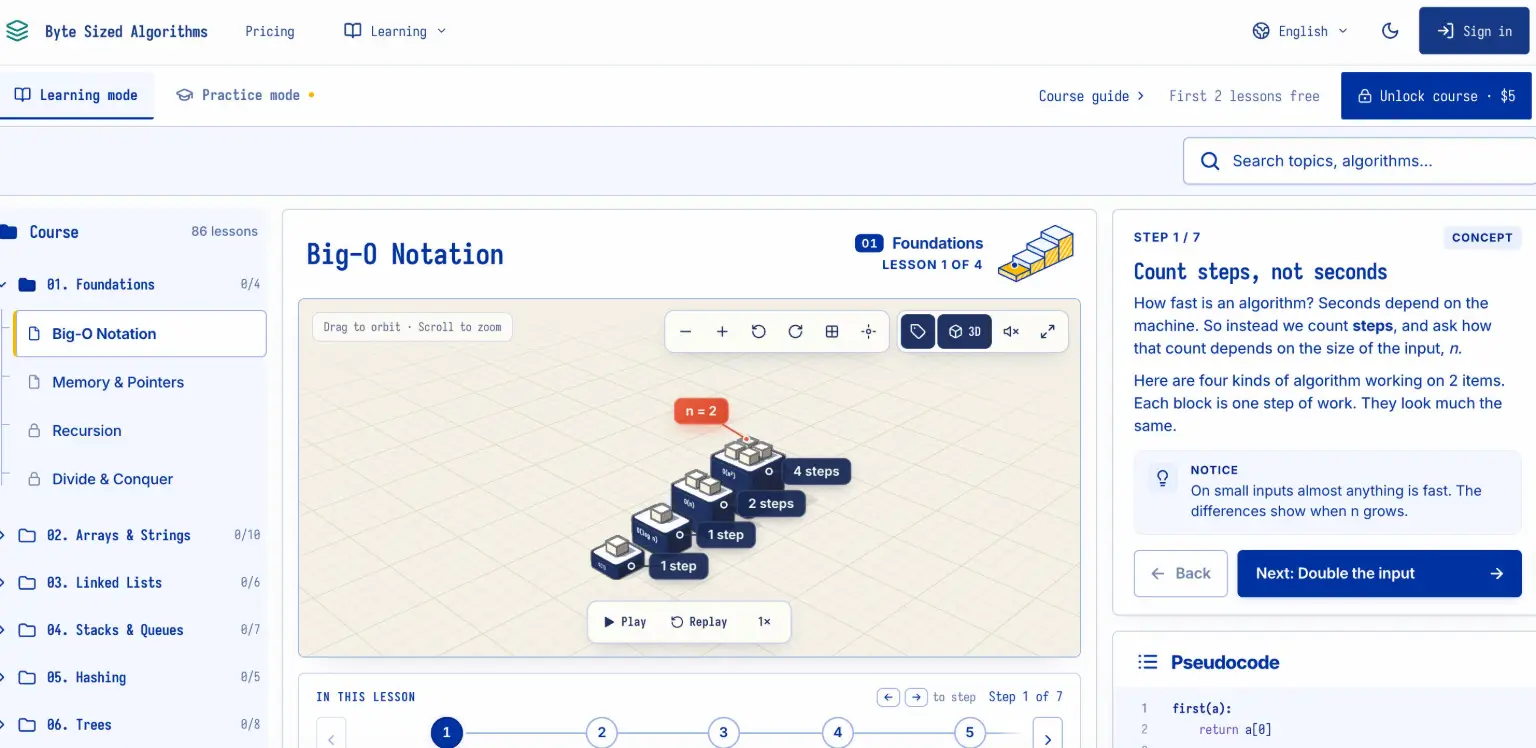
That's where Byte Sized Algorithms comes in. It is an interactive learning platform that makes data structures and algorithms easier to understand through animated diagrams, step-by-step explanations, and code examples.
Instead of simply reading about an algorithm, you can watch how it works and follow each operation at your own pace.
What Is Byte Sized Algorithms?
Byte Sized Algorithms is an online learning platform focused on visualizing data structures and algorithms.
It brings together 86 short lessons organized into 14 chapters, covering everything from fundamental computer science concepts to more advanced problem-solving techniques.
The platform combines three important learning elements:
- Animated diagrams: Watch how data structures and algorithms change during execution.
- Step-by-step explanations: Follow individual operations instead of trying to understand everything at once.
- Code examples: Connect what you see in the animation with the underlying programming logic.
Everything runs directly in your browser. You don't need to download software, install a compiler, or configure a development environment to get started.
What Can You Learn with Byte Sized Algorithms?
Byte Sized Algorithms covers a wide range of computer science topics. Its curriculum starts with fundamental concepts and gradually introduces more advanced algorithms.
1. Big-O Notation and Memory Fundamentals
Understanding time complexity and memory usage is important when learning algorithms.
You can start with Big-O Notation to understand how algorithm efficiency changes as input sizes grow. The Memory & Pointers lesson introduces how memory addresses and references connect different values.
These foundational concepts make it easier to understand more complicated data structures later.
2. Arrays, Linked Lists, Stacks, and Queues
Data structures are the foundation of many programming problems.
Byte Sized Algorithms helps you explore how common structures work, including:
- Arrays and strings
- Linked lists
- Stacks and queues
- Hash tables
- Trees and heaps
- Graphs
For example, when studying linked lists, you can follow how pointers connect individual nodes. When exploring stacks, you can see how elements are added and removed.
These visual explanations help turn abstract concepts into something easier to follow.
3. Sorting and Searching Algorithms
Sorting and searching are among the most common topics in computer science courses and coding interviews.
You can explore algorithms such as sorting techniques, binary search, and other search-related methods.
Following each operation visually makes it easier to understand how an algorithm processes data and why certain approaches are more efficient than others.
4. Advanced Problem-Solving Techniques
After learning the fundamentals, you can continue with more advanced concepts, including:
- Greedy algorithms
- Backtracking
- Dynamic programming
- Bit manipulation
- Graph algorithms
These topics are particularly useful when preparing for technical interviews or solving more complex programming challenges.
Why Learn Algorithms Through Visualizations?
Traditional algorithm tutorials often rely heavily on written explanations and code snippets. While these are useful, they can make certain concepts difficult to visualize.
An interactive learning approach offers a different experience.
See how algorithms execute
Instead of guessing what happens between lines of code, you can follow the changes in an animated diagram. This is especially helpful for understanding pointers, recursion, and graph traversal.
Learn one step at a time
You can move forward and backward through lesson steps, giving yourself time to understand each operation before continuing.
Connect diagrams with code
Seeing the visual representation alongside the explanation and code helps you connect programming logic with the underlying data structures.
Study at your own pace
You can revisit previous steps, search for specific lessons, and explore topics in whatever order works best for you.
Who Should Use Byte Sized Algorithms?
Byte Sized Algorithms can be useful for different types of learners.
Beginners Learning Computer Science
If you're new to data structures and algorithms, visual explanations can make unfamiliar concepts easier to understand.
Start with Big-O Notation and Memory & Pointers before moving into arrays, linked lists, and other fundamental structures.
Developers Preparing for Coding Interviews
Data structures and algorithms are common subjects in technical interviews.
You can use the lessons to review important concepts such as two pointers, sliding windows, binary search, graph traversal, and dynamic programming.
The visual examples can help you understand the logic before implementing an algorithm yourself.
Computer Science Students
Students studying computer science can use the platform as a supplementary learning resource.
When a textbook explanation feels too abstract, an animated example can provide another way to understand the same concept.
Is Byte Sized Algorithms Free?
Yes, you can start learning without paying.
The first two lessons, Big-O Notation and Memory & Pointers, are available for free.
If you want to access the complete course, Byte Sized Algorithms offers a one-time payment of $5 USD for lifetime access to all 86 lessons.
There is no monthly subscription or recurring payment.
Purchases are linked to your Google account, allowing you to access the full course on other devices by signing in with the same account.
Final Thoughts
Learning data structures and algorithms doesn't have to mean spending hours trying to understand static diagrams or complicated code examples.
Byte Sized Algorithms offers a more visual approach by combining animated diagrams, step-by-step explanations, and code examples in one browser-based learning environment.
Whether you're a beginner learning computer science fundamentals, a student reviewing algorithms, or a developer preparing for coding interviews, it's a useful resource to explore.
If you prefer seeing how an algorithm works rather than just reading about it, give Byte Sized Algorithms a try. You can start with two free lessons and decide whether the complete course is worth exploring.